
What Role Does Spray Foam Play in Moisture and Mold Prevention on Farms?
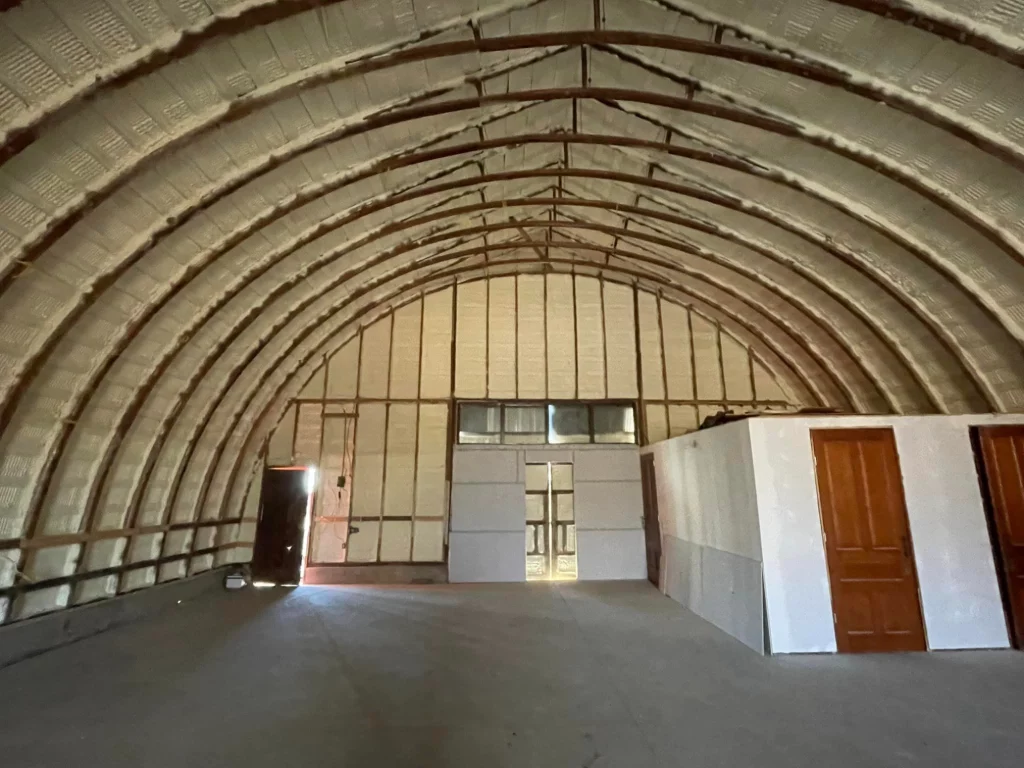
Spray foam moisture prevention plays a direct role in stopping moisture intrusion and mold formation in agricultural buildings. By creating an air-tight and moisture-resistant barrier, it blocks humid outdoor air from entering temperature-sensitive spaces like livestock shelters, storage facilities, and processing barns. The material adheres to irregular surfaces, leaving no gaps for condensation to settle stopping mold before it starts.
Closed cell spray foam is especially effective due to its high density and low permeability. It resists water vapor and prevents moisture from seeping into framing cavities. Farms in humid zones or those using water-intensive processes benefit from this resistance. Unlike fibrous insulation types that trap moisture, spray foam repels it.
Ozark Eco Foam has installed spray foam across a range of Kansas farms, from poultry barns to equipment sheds. Field data consistently show that closed cell spray foam reduces indoor humidity fluctuations and eliminates microbial growth on interior wall surfaces.
How Spray Foam Stops Moisture Intrusion
Moisture enters farm structures through leaks, condensation, and air gaps. Spray foam forms a continuous seal that minimizes:
- Thermal bridging
- Surface condensation
- Vapor migration
Without this protection, organic materials like wood, straw, and feed become breeding grounds for mold.
Technical Comparison of Insulation Types
Bonus Tip: In livestock structures, always use closed cell spray foam to resist ammonia and animal-related vapors that degrade traditional insulation.
Why Mold is a Persistent Threat on Farms
Mold thrives in organic-rich, humid environments. On farms, hay storage areas, feed rooms, and animal housing units are vulnerable due to:
- Seasonal humidity swings
- Unsealed walls and joints
- High water usage
- Inadequate ventilation
According to the USDA Agricultural Research Service, mold contamination in farm buildings can reduce livestock productivity by up to 12% (Source: USDA ARS, 2024). Spray foam blocks external moisture and limits internal vapor drive, removing the conditions mold needs to grow.
Moisture Control Performance by Spray Foam Type
Bonus Tip: In regions with freezing winters like Southeast Kansas, closed cell foam helps prevent frost-related cracking by sealing out moisture that can freeze inside cavities.
Region-Specific Considerations in Kansas Agriculture
Southeast Kansas farms face high humidity from May to September and frequent freeze-thaw cycles from November to March. These conditions encourage moisture penetration and structural swelling. Spray foam applied to:
- Interior roof panels
- Undersides of metal roofs
- Crawl spaces and wall interiors
Things to Consider Before Making a Decision
- Building Use: Structures storing grain or housing animals need higher moisture protection than equipment sheds.
- Ventilation Design: Spray foam must complement not replace mechanical or passive airflow systems.
- Insulation Access: Retrofitting old wood-frame barns may require partial disassembly for foam application.
- Budget: Closed cell foam costs more upfront but provides longer service life and fewer mold-related losses.
- Wall Type: Closed cell is ideal for metal and block walls; open cell works for interior-only zones with lower moisture risk.
Services That Address This Issue Directly
- Closed Cell Spray Foam: Best suited for moisture control in high-risk zones like animal shelters and feed rooms.
- Agricultural Spray Foam: Custom-applied for farm structures to minimize condensation and support indoor air quality.
- Crawl Space Insulation: Blocks ground moisture from rising into flooring systems.
- Insulation Removal: Replaces failing insulation that traps moisture and supports mold growth.
Common Questions Before Choosing Farm Insulation
Is spray foam safe for livestock environments?
Yes, once cured. Use closed cell in animal shelters to reduce vapor and odor absorption.
Does spray foam trap moisture inside walls?
No, closed cell acts as a vapor barrier; it prevents outside moisture from entering and reduces internal condensation.
How long does it take to install?
One to three days depending on building size and prep requirements.
Can it be used under metal roofs?
Yes. It adheres well to metal and prevents condensation under roof decks.
Will spray foam reduce humidity inside?
Yes, by limiting moisture intrusion and sealing air gaps, it lowers overall indoor humidity.
Get Expert Insulation Guidance
For long-term moisture control and mold prevention in Kansas farm structures, contact Ozark Eco Foam. Reliable insights come from hands-on experience with agricultural environments.
FAQ Section
What maintenance does spray foam require on farms?
Minimal. Inspect visually every few years for surface cracks or mechanical damage.
Can it be applied in cold weather?
Yes, but with specialized equipment and surface prep. Cold-weather formulations improve adhesion.
How does spray foam handle rodent exposure?
It doesn’t attract rodents, but they can tunnel through if other materials nearby support nesting. Use barrier panels in exposed areas.
How does spray foam compare in ROI to traditional insulation?
Closed cell foam typically pays off in 5-8 years through reduced mold damage, better temperature control, and longer insulation lifespan.
Is reapplication ever needed?
Only if mechanically damaged or improperly applied. Otherwise, it lasts decades with stable performance.
Get a QUote
Our Posts
Crawl Space Insulation Air Quality
Crawl Space Insulation Indoor Air Quality
Commercial Spray Foam Insulation
Insulation Removal Spray Foam Upgrade Galena Ks
Spray Foam Insulation Agricultural Buildings
Open Cell Vs Closed Cell Foam New Construction
- Increase TextIncrease Text
- Decrease TextDecrease Text
- GrayscaleGrayscale
- High ContrastHigh Contrast
- Negative ContrastNegative Contrast
- Light BackgroundLight Background
- Links UnderlineLinks Underline
- Readable FontReadable Font
- Reset Reset