
Can Spray Foam Reduce Moisture and Mold in Basements?
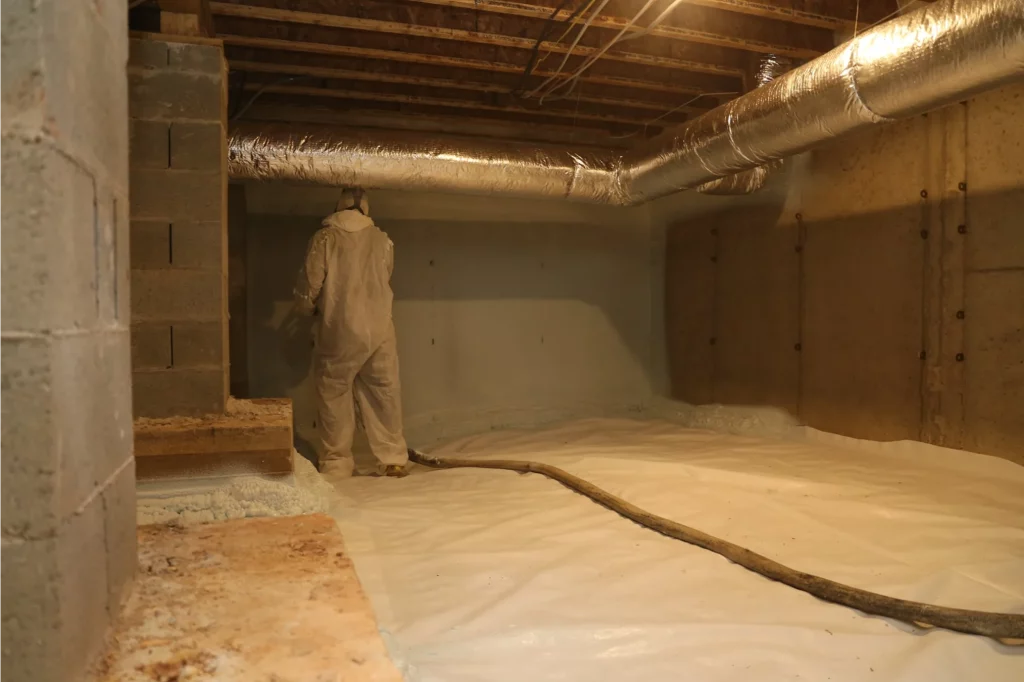
Spray foam insulation can reduce moisture and mold in basements by sealing gaps that allow humid air to enter. This prevents condensation on cold surfaces and blocks water vapor infiltration. Closed cell spray foam is particularly effective due to its moisture-resistant structure. Unlike traditional insulation, spray foam forms a continuous air and vapor barrier.
Air leakage is a primary factor behind mold and dampness in basements. When warm, moist air contacts cool basement walls, it condenses, creating conditions for mold. By eliminating these entry points, spray foam changes the moisture dynamics inside the space. Ozark Eco Foam uses this approach in moisture-prone environments where standard insulation materials have failed.
This article provides a clear breakdown of how spray foam impacts basement moisture levels, technical characteristics to evaluate, material comparisons, and region-specific insights. The information is based on field experience across residential and agricultural properties.
How Spray Foam Prevents Moisture Issues in Basements
Sealing Air Leaks Is the First Step
Most basement moisture comes from uncontrolled air movement, not water leaks. In areas like Kansas and Missouri, seasonal humidity increases the risk. Crawl spaces and rim joists are typical entry points. Spray foam insulation eliminates these air gaps, reducing condensation potential.
Vapor Retarder Properties of Closed Cell Foam
Closed cell spray foam has a permeability rating under 1.0 perm at 2 inches, qualifying it as a Class II vapor retarder. This limits the movement of water vapor from the soil or humid air into the basement interior.
Mold Resistance
Mold needs moisture and organic material. Spray foam contains no food source and does not absorb water. In contrast, fiberglass can trap moisture and dust, both of which support mold growth.
Bonus Tip
In humid basements, combining closed cell spray foam with a dehumidifier creates an environment where mold cannot survive, even during seasonal humidity spikes.
Technical Characteristics to Compare
Regional and Construction Considerations
In the Midwest, summer humidity and poorly ventilated basements are common. Homes built before 1980 often lack vapor barriers and proper air sealing in lower levels. Spray foam corrects these oversights by sealing foundation walls, rim joists, and underfloor areas.
Buildings with block or stone foundations benefit from closed cell foam as it strengthens surfaces and limits moisture transfer. For newer concrete walls, spray foam pairs well with air-sealed framing and rigid foam layers.
Performance Specifications of Common Basement Insulation Materials
Things to Check Before Choosing an Insulation Approach
- Wall Condition: Cracked or damp walls must be remediated before applying foam.
- Basement Use: Conditioned basements for living space need full wall and rim insulation. Storage basements may only need partial coverage.
- Climate Zone: In Zone 4 or 5 areas (like Kansas), vapor control is critical due to seasonal humidity swings.
- Drainage: Waterproofing and drainage systems should be in place before insulation.
Installers must not apply spray foam to visibly wet surfaces. Waiting for full drying or using a drying agent is necessary for proper adhesion.
Services Related to This Issue
Ozark Eco Foam provides several services that directly support moisture control in basements:
- Closed Cell Spray Foam: Moisture-resistant and structural support for block or stone walls.
- Crawl Space Insulation: Air seals rim joists and prevents ground moisture from rising into living spaces.
- Insulation Removal: Removal of damp fiberglass and mold-prone materials before applying foam.
- Air Sealing: Prevents humid air from entering through wall gaps, rim joists, and sill plates.
Questions People Ask Before Deciding
What parts of the basement should be insulated to stop moisture?
Focus on the foundation walls, rim joists, sill plates, and underfloor areas above crawl spaces. Avoid insulating with moisture-trapping materials like fiberglass.
Can I apply spray foam over concrete block walls?
Yes, but only after the surface is dry and free of loose debris. Closed cell foam bonds well to concrete and block.
Do I need a vapor barrier with spray foam?
Not if closed cell spray foam is used at 2 inches or more. It functions as a vapor retarder.
Should I insulate basement ceilings or walls?
Walls are the priority for moisture control. Ceilings can be addressed for soundproofing or temperature control.
Make a Decision Based on Your Specific Situation
Spray foam can be a reliable solution to reduce basement moisture and prevent mold if used in the right way. Start by checking wall conditions, drainage, and the intended use of the basement. Closed cell spray foam works best in damp environments. The right application and thickness make the difference.
Need Help Deciding the Right Basement Insulation?
Long-Term Considerations for Spray Foam in Basements
How long does spray foam last in a basement?
Closed cell spray foam has a lifespan of 30–50 years when applied correctly and protected from UV exposure.
Can spray foam be used with other insulation types?
Yes. For example, rigid foam or mineral wool can be added over spray foam for added thermal resistance.
Is spray foam affected by seasonal humidity?
No. Once cured, closed cell foam remains dimensionally stable and does not absorb moisture.
Does spray foam need maintenance?
No. It does not sag, shift, or settle. Visual inspection is recommended every few years to confirm no structural or moisture intrusion issues.
Can spray foam trap moisture behind it?
Not if the walls are dry and vapor control is considered during application. Installers should assess all substrates before installation.
Get a QUote
Our Posts
Crawl Space Insulation Air Quality
Crawl Space Insulation Indoor Air Quality
Commercial Spray Foam Insulation
Insulation Removal Spray Foam Upgrade Galena Ks
Spray Foam Insulation Agricultural Buildings
Open Cell Vs Closed Cell Foam New Construction
- Increase TextIncrease Text
- Decrease TextDecrease Text
- GrayscaleGrayscale
- High ContrastHigh Contrast
- Negative ContrastNegative Contrast
- Light BackgroundLight Background
- Links UnderlineLinks Underline
- Readable FontReadable Font
- Reset Reset