
Does Spray Foam Insulation Stop Air Leaks?
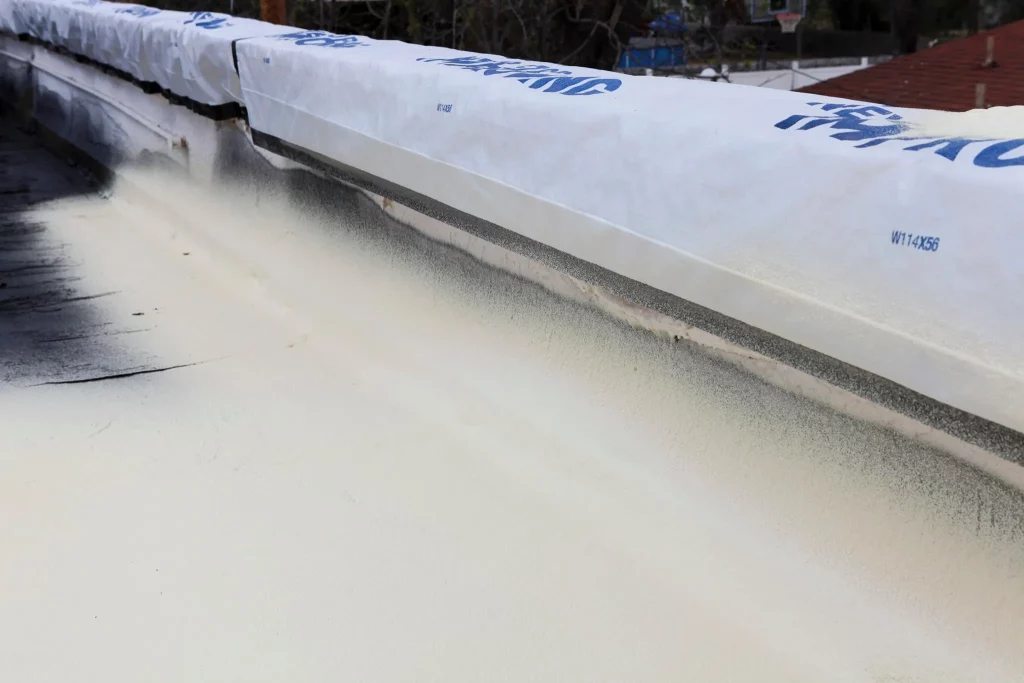
Spray foam insulation creates an air barrier that blocks most air leakage when correctly applied. The effectiveness depends on the foam type, installation quality, and the surface conditions. Closed cell spray foam provides a higher air sealing capability compared to open cell spray foam. Applied to gaps, joints, and cavities, it expands to fill irregular spaces and reduce uncontrolled airflow.
In real-world installations, spray foam has proven to outperform traditional insulation materials like fiberglass or cellulose in preventing air leakage. This performance is particularly important in buildings located in areas with temperature extremes, such as Kansas, where energy loss through air leaks can significantly affect comfort and HVAC efficiency.
Professionals in insulation installation have consistently found that proper application of spray foam along rim joists, attic penetrations, crawl space walls, and sheathing transitions results in a tight building envelope. This article details how spray foam works, technical differences between foam types, and practical factors to consider.
How Spray Foam Insulation Blocks Air Movement
Spray foam insulation expands on contact, forming a continuous seal that adheres to the application surface. Unlike batt or blown-in materials, it creates an integrated barrier against both conduction and convection. Air leaks often occur through gaps in framing, attic bypasses, rim joists, and mechanical penetrations. Spray foam addresses these by conforming to irregular shapes and hard-to-reach locations.
Application-Specific Performance
Bonus Tip: Consistency of application matters more than foam volume. Uneven coverage leaves voids that reintroduce air leakage risk.
Foam Types and Their Air Sealing Capability
Closed cell and open cell spray foams differ in structure, rigidity, and permeability. Closed cell offers superior resistance to air, moisture, and vapor infiltration.
Material Comparison Table
Source: U.S. Department of Energy; Building Science Corporation
What to Check Before Choosing Spray Foam for Air Sealing
- Surface Condition: Clean, dry, and free of oils or dust for optimal adhesion.
- Gap Size: Foam expands to fill voids, but excessive cavity size may need backing material.
- Building Use: Agricultural, residential, and commercial applications each have different code requirements.
- Climate: High humidity or extreme temperatures affect foam performance and selection.
- Ventilation Planning: Tighter envelopes reduce passive airflow and may require mechanical ventilation.
Bonus Tip: Use a blower door test before and after insulation to quantify air leakage reduction. This helps verify results and qualify for energy efficiency incentives.
Most Relevant Services from Ozark Eco Foam
Direct Advice for Final Decisions
Closed cell spray foam offers the strongest defense against air leaks, especially in rim joists, crawl spaces, and attic transitions. Open cell is more suitable for interior partitions or where sound control is prioritized. Select the type based on location-specific needs, moisture risks, and structural goals. Conduct pre- and post-install testing to validate performance and qualify for energy rebates.
Talk to a Specialist
Common Questions About Choosing Air Sealing Insulation
Which foam type should I use for attic leaks?
Closed cell is preferred for unvented or conditioned attics due to its vapor resistance and structural integrity.
Can spray foam be added to existing insulation?
Yes, but the area must be prepped and assessed to avoid trapping moisture between layers.
Does spray foam solve moisture issues?
Closed cell helps control moisture vapor. However, bulk water issues must be resolved separately.
Will all leaks be sealed with spray foam?
Only areas directly treated will seal. Other gaps may still leak unless comprehensively addressed.
FAQS
How long does spray foam last as an air barrier?
Properly applied spray foam can maintain its sealing ability for decades without shrinkage or breakdown.
Can rodents or pests penetrate spray foam?
Foam resists entry but is not pest-proof. Additional sealing or barriers may be needed in rodent-prone areas.
What inspections should follow spray foam installation?
Visual checks for gaps, post-install blower door testing, and HVAC system balancing are recommended.
Does spray foam insulation need any maintenance?
No regular maintenance is required unless physical damage occurs or alterations to sealed areas are made.
How does spray foam affect indoor air quality?
Off-gassing is minimal after curing. Proper ventilation planning ensures healthy IAQ.
Get a QUote
Our Posts
Crawl Space Insulation Air Quality
Crawl Space Insulation Indoor Air Quality
Commercial Spray Foam Insulation
Insulation Removal Spray Foam Upgrade Galena Ks
Spray Foam Insulation Agricultural Buildings
Open Cell Vs Closed Cell Foam New Construction
- Increase TextIncrease Text
- Decrease TextDecrease Text
- GrayscaleGrayscale
- High ContrastHigh Contrast
- Negative ContrastNegative Contrast
- Light BackgroundLight Background
- Links UnderlineLinks Underline
- Readable FontReadable Font
- Reset Reset