
How Does Commercial Spray Foam Improve HVAC Efficiency in Joplin, MO Office Buildings?
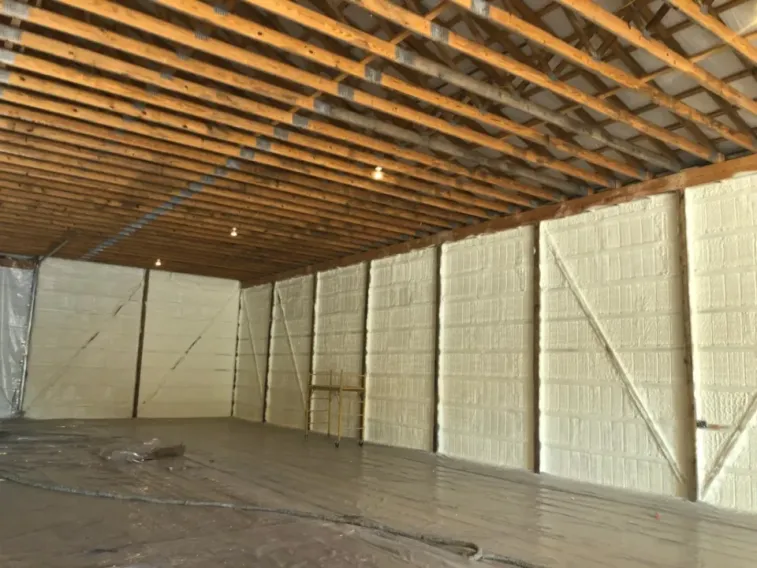
Commercial spray foam HVAC efficiency Joplin MO improves building performance by reducing air leakage, enhancing thermal resistance, and minimizing moisture infiltration.. In Joplin MO, where humidity and temperature swings are common, poorly insulated office buildings can see substantial energy loss through gaps, cracks, and under-insulated structural elements. Closed cell spray foam, in particular, creates a continuous air and moisture barrier that lowers the workload on HVAC systems.
Buildings using commercial spray foam insulation often require smaller HVAC units, run systems less frequently, and maintain more consistent indoor temperatures. This results in lower energy consumption, extended HVAC system lifespan, and improved occupant comfort. The following sections provide data-backed insights, comparisons, and expert recommendations specific to Joplin’s climate.
Ozark Eco Foam uses hands-on experience from regional projects to present this information, incorporating tested performance data and local environmental factors.
Key Technical Benefits of Spray Foam for HVAC Efficiency
Thermal and Air Barrier Comparison
Technical Specs of Closed Cell Spray Foam
Region-Specific Considerations in Joplin, MO
The local climate includes humid summers and cold winters, creating year-round HVAC demand. Buildings without adequate air sealing experience:
- Thermal bridging in metal structures
- High latent load due to moisture entry
- Pressure imbalance across floors and zones
Spray foam insulation performs well in this environment by:
- Preventing condensation in metal-frame buildings
- Supporting HVAC zoning efficiency
- Improving indoor air quality by sealing off pollutants
Bonus Tip: In retrofit projects, combining spray foam with air sealing around mechanical penetrations can reduce total energy loss by over 25% based on 2023 field data from Midwest Energy Efficiency Alliance.
Market Data on Energy Savings and System Longevity
Things to Consider Before Making a Decision
- Building Use Type: Office layouts with high internal loads (lighting, computers) benefit most.
- Existing Insulation: Retrofitting over poor insulation may require full removal to prevent moisture traps.
- Roof and Wall Access: Accessibility affects installation feasibility and cost.
- HVAC System Compatibility: Downsizing HVAC systems post-insulation can reduce future operating costs.
- Local Code Compliance: Ensure closed cell applications meet Class 1 fire rating and local energy codes.
Bonus Tip: Use thermal imaging pre- and post-installation to verify insulation coverage and detect any missed cavities.
Common Questions Before Installation
Does spray foam eliminate the need for other HVAC upgrades?
No. It reduces system demand but should be part of an integrated energy plan.
How long does installation take in a mid-sized office building?
Typically 2-3 days, depending on accessibility and square footage.
Is there downtime for tenants during installation?
Yes, short-term access restrictions are required for safety and curing.
Will it affect indoor air quality during or after install?
Off-gassing is temporary. Proper ventilation during application avoids indoor air issues.
Insulation Services Offered for Commercial Applications
Ozark Eco Foam provides focused solutions for energy-efficient buildings:
- Commercial Insulation: Applied to wall cavities, ceilings, and roofs for full-envelope coverage.
- Closed Cell Spray Foam: High R-value and moisture control in one application.
- Air Sealing: Seals gaps around ducts, wiring, and penetrations to reduce leakage.
- Insulation Removal: Prepares spaces for clean retrofit installations.
Get Expert Insulation Guidance
Contact Ozark Eco Foam for project-specific consultation and honest assessment of your building’s insulation needs. Regional experience and practical installation knowledge drive efficient results.
FAQ About Spray Foam and HVAC Efficiency
How long do energy savings last after installing spray foam?
Savings typically persist for the lifetime of the insulation, usually 20+ years with closed cell.
Can spray foam reduce the size of my HVAC system?
Yes. Engineers often downsize systems by 20-30% after installation.
Does it help with noise reduction?
Yes, particularly open cell spray foam which dampens airborne sound between offices.
Is it compatible with metal building frames?
Closed cell adheres well to metal and helps prevent thermal bridging and condensation.
What maintenance does spray foam require?
None. Once applied, it remains in place and retains its performance.
Get a QUote
Our Posts
Crawl Space Insulation Air Quality
Crawl Space Insulation Indoor Air Quality
Commercial Spray Foam Insulation
Insulation Removal Spray Foam Upgrade Galena Ks
Spray Foam Insulation Agricultural Buildings
Open Cell Vs Closed Cell Foam New Construction
- Increase TextIncrease Text
- Decrease TextDecrease Text
- GrayscaleGrayscale
- High ContrastHigh Contrast
- Negative ContrastNegative Contrast
- Light BackgroundLight Background
- Links UnderlineLinks Underline
- Readable FontReadable Font
- Reset Reset