
Why Bentonville Homes Need Spray Foam Insulation
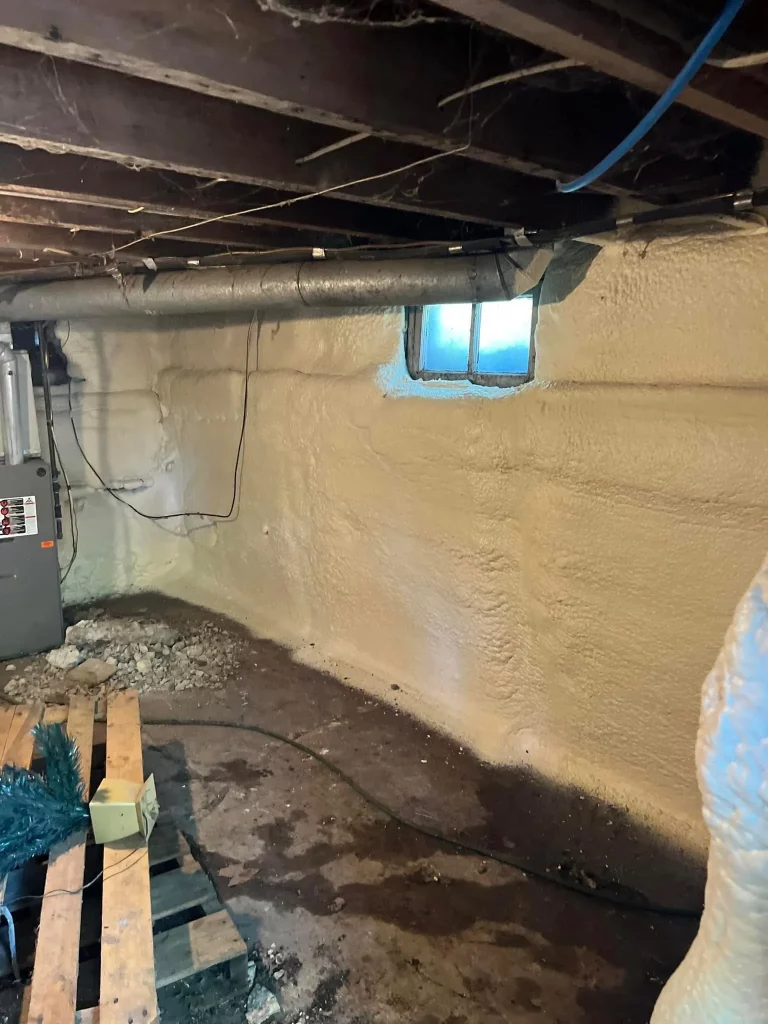
Spray foam insulation addresses the most common efficiency failures in Bentonville homes: uncontrolled air leakage, high humidity transfer, and poor thermal resistance in extreme seasonal temperatures. Homes in this region experience both sweltering summers and cold winters, which strain HVAC systems when insulation is inadequate. Spray foam, particularly closed-cell options, acts as both an air barrier and insulator, reducing energy waste and moisture problems.
Bentonville homes benefit from spray foam because of the area’s temperature swings, common crawl spaces, and older construction lacking modern insulation standards. Applied directly to wall cavities, attics, crawl spaces, and pole barns, spray foam eliminates gaps left by traditional fiberglass batts or blown-in insulation. This guide outlines its performance, material options, and key considerations.
Experience-backed insight: Ozark Eco Foam has completed hundreds of installations in Northwest Arkansas, dealing with diverse structures, climate challenges, and insulation failures firsthand.
Regional Performance Requirements for Bentonville Homes
Homes in Northwest Arkansas face broad thermal demands and significant humidity shifts year-round. Spray foam responds effectively to these regional factors:
Climate Challenges
- Summer: High temperatures and humidity increase cooling loads and condensation risk.
- Winter: Cold snaps cause heat loss through roofs, walls, and crawl spaces.
- Year-round: Air leakage reduces HVAC efficiency and contributes to uneven indoor temperatures.
Bonus Tip: For homes with HVAC ducts in the attic, spray foam on the roof deck improves year-round energy retention.
Material Options Compared
Spray foam insulation is available in two primary forms. Each serves different performance priorities.
Bonus Tip: Use open-cell spray foam in attic floors when humidity control is already managed by HVAC. Use closed-cell in high-moisture zones like crawl spaces and rim joists.
Technical Properties
Source: U.S. Department of Energy – Building America Solution Center (buildings.energy.gov)
Things to Check Before Choosing an Insulation Solution
- Building Age: Older homes in Bentonville often lack vapor barriers, requiring foam types with moisture control.
- Roof Ventilation: Spray foam applied to unvented attic assemblies requires sealing ridge and soffit vents.
- HVAC Location: Ducts inside insulated attics perform better with roof deck foam.
- Subfloor Exposure: Homes with exposed crawl spaces need high-density foam to block moisture and air intrusion.
- Code Compliance: Closed-cell foam meets FEMA Class 5 flood damage resistance for applicable zones.
Market Insight: Arkansas homes with professionally installed spray foam insulation see an average 20%-40% HVAC energy reduction annually, according to Energy Star data (energystar.gov).
Focused Services from Ozark Eco Foam
These insulation types serve the unique needs of residential and agricultural properties in the Bentonville area:
- Closed Cell Spray Foam: High-performance insulation for crawl spaces, roof decks, and pole barns.
- Open Cell Spray Foam: Cost-effective solution for attic floors and interior walls.
- Crawl Space Insulation: Seals out ground moisture and improves subfloor energy retention.
- Attic Insulation: Provides complete thermal and air barrier across the roofline or floor decking.
Direct Summary
Spray foam insulation is highly effective for Bentonville homes facing extreme temperature shifts and moisture issues. It reduces energy waste, prevents condensation, and strengthens the building envelope across attics, crawl spaces, and wall systems. The choice between open-cell and closed-cell foam depends on moisture exposure, structure type, and specific performance priorities.
Contact Ozark Eco Foam
To evaluate the most effective insulation solution for your Bentonville property, reach out to Ozark Eco Foam. For questions or project assessments:
Common Questions Before Installing Spray Foam
What type of foam should be used in a vented attic?
Open-cell spray foam works well on attic floors when combined with proper ventilation and moisture control.
Does spray foam need a vapor barrier in Bentonville homes?
Closed-cell foam provides an integrated vapor barrier, which is recommended for crawl spaces and basement walls.
Can spray foam be added to existing walls?
Retrofit options exist, but may require drywall removal or injection foam alternatives.
Is insulation removal necessary before application?
Old fiberglass or cellulose should be removed if degraded or mold-prone to ensure adhesion and effectiveness.
FAQS
How long does spray foam last?
Properly applied spray foam insulation lasts 20+ years without significant degradation.
Can spray foam cause roof decking to rot?
When installed without adequate moisture control, yes. Closed-cell foam prevents this by limiting vapor transmission.
Does spray foam insulation impact indoor air quality?
It can improve air quality by sealing out allergens and pollutants, assuming proper ventilation is maintained.
Is it safe for homes with wiring or recessed lights?
Yes, but installation must maintain clearance from heat-producing fixtures unless rated for insulation contact.
What maintenance is required?
Spray foam requires no regular maintenance but should be inspected during any structural or HVAC upgrades.
Get a QUote
Our Posts
Crawl Space Insulation Air Quality
Crawl Space Insulation Indoor Air Quality
Commercial Spray Foam Insulation
Insulation Removal Spray Foam Upgrade Galena Ks
Spray Foam Insulation Agricultural Buildings
Open Cell Vs Closed Cell Foam New Construction
- Increase TextIncrease Text
- Decrease TextDecrease Text
- GrayscaleGrayscale
- High ContrastHigh Contrast
- Negative ContrastNegative Contrast
- Light BackgroundLight Background
- Links UnderlineLinks Underline
- Readable FontReadable Font
- Reset Reset